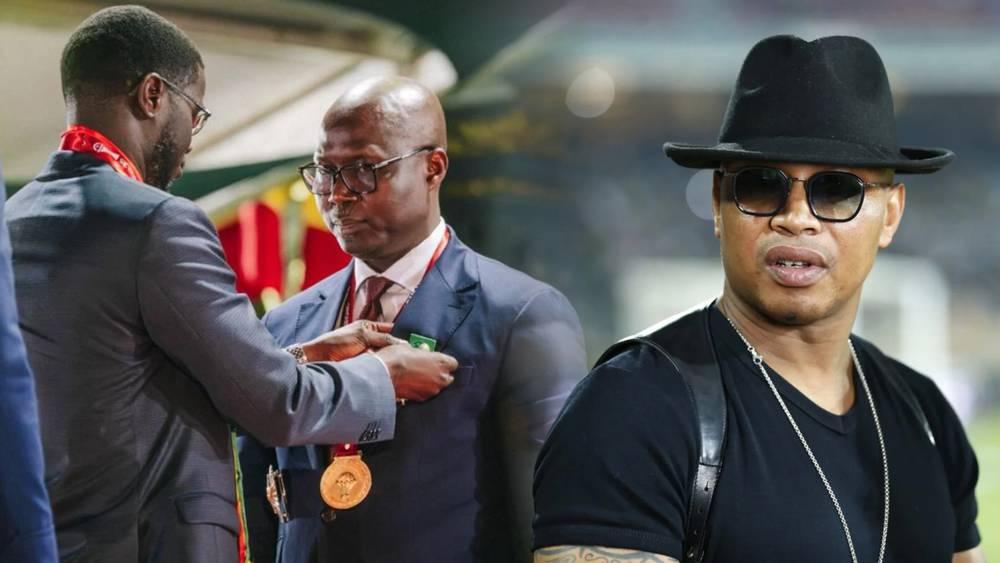
Bonuses and Land: El Hadji Diouf's Statements Embarrass Senegalese Football Federation
The Senegalese Football Federation (FSF) has issued a statement regarding remarks made by former national team player El Hadji Ousseynou Diouf. The FSF's statement has sparked widespread controversy, as it appeared to impose restrictions on the freedom of expression for former players, seemingly attempting to delegitimize their personal opinions.
Diouf had previously made statements criticizing the Senegalese state's handling of land allocation and bonuses promised to national team players after their triumph in the 2021 Africa Cup of Nations. He highlighted that the land parcels promised to players at the time have still not been officially granted to them. He also touched upon certain administrative policies and governance issues within national football, which many considered a frank discussion of sensitive matters concerning transparency in sports.
However, the FSF quickly issued an official statement distancing itself from Diouf's comments, asserting that they do not represent the federation's stance and that it adheres to official channels for addressing any issue. This was seen as a clear disregard for the role of public dialogue and players' right to express their opinions.
The FSF's statement went beyond merely clarifying its position; it went further by declaring its "complete disavowal" of Diouf's remarks, describing them as "unfortunate" and damaging to the country's reputation.
This approach to dealing with a player of Diouf's stature raises a fundamental question: Does the federation fear Diouf's media influence? Instead of engaging with the "prodigal son" and addressing the players' demands articulated by Diouf regarding "real estate bonuses," the federation chose to hide behind administrative channels, claiming that these demands "only bind their originator."
In the same statement, the federation referred to former player Diouf as a "football legend," yet simultaneously attempted to strip his opinion on international affairs of any weight.
The FSF's assertion that "international policy is exclusively determined by the Executive Committee" appears to be an attempt to "silence" Diouf, especially given his strong relationships with other continental federations. This seems to be perceived by the Senegalese FA as a threat to its traditional sports diplomacy.