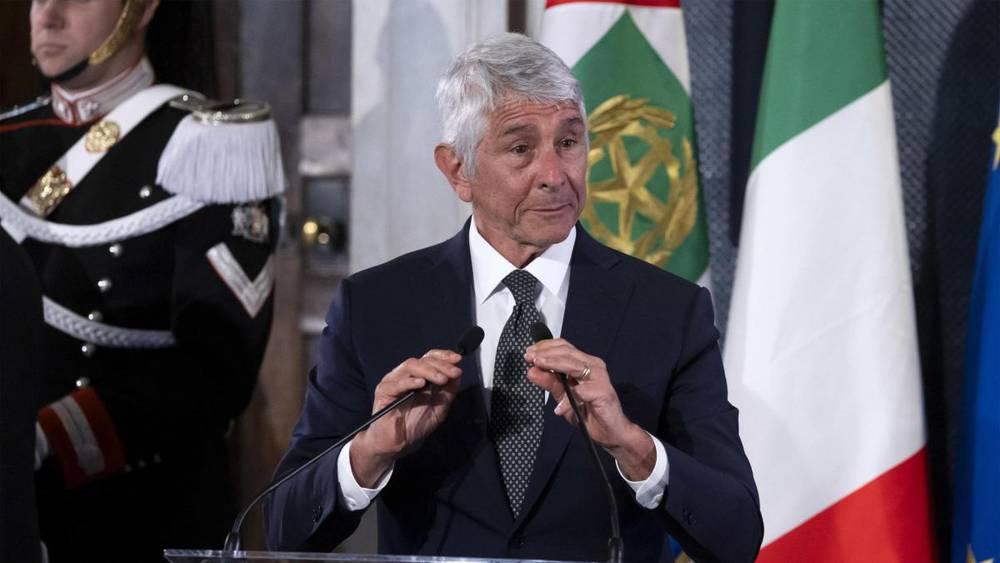
Italian Sports Minister: 'Consensus Not Enough to Lead Federation, Harmony Essential to Avoid World Cup Disappointment'
Andrea Abodi, Italy's Minister of Sport and Youth, emphasized that qualitative cooperation and complete harmony among all components of the sports system are fundamental pillars for the future of the Italian Football Federation (FIGC). Speaking at the Luiss Sport Forum in Rome, Abodi noted that mere numerical consensus in elections is insufficient to achieve desired success and develop the sport.
The Italian Minister clarified that the high percentage of votes Gabriele Gravina received in previous elections serves as concrete evidence that the quantity of consensus does not dictate final outcomes, but rather the quality of actual coordination. Andrea Abodi stated: "The 98.7% of votes Gravina received in the last election is proof that the quantity of consensus is not what determines things, but rather the quality of cooperation between the components." In this context, he stressed the importance of formulating clear programs that ensure alignment between individual interests and general objectives to prevent any obstruction of necessary changes.
Abodi warned against repeating past failures that have kept Italy out of global competitions, noting that a lack of harmony could render past setbacks meaningless lessons. Andrea Abodi stated: "The painful experience from a sporting point of view against Bosnia risks having no meaning, and defeat must be a driver for solving problems." In a related context, the Minister revealed the exclusion of the hypothesis of imposing guardianship or appointing a commissioner to manage the affairs of the Italian Football Federation, an idea that had been circulated earlier before being abandoned.
Regarding ongoing electoral movements, recent days have seen a push from Giancarlo Abete towards the electoral process, while Giovanni Malagò received official support from the Italian League. However, Abete objected to the methodology employed by the League in selecting Malagò, reflecting a divergence in viewpoints concerning the mechanism for choosing the new leadership.