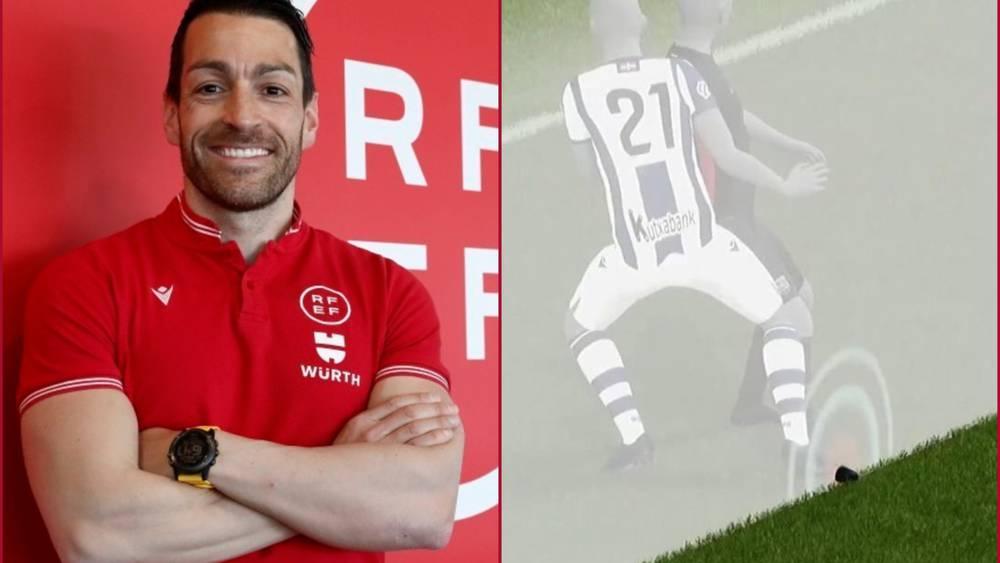
Spanish VAR Director Clarifies Virtual Graphics in Offside Decisions
Eduardo Prieto Iglesias, director of VAR technology and a member of the Technical Committee of Referees in Spain, clarified the operational details of the semi-automated offside system used in Spanish stadiums. Appearing on the program 'Tiempo de Juego', Iglesias affirmed that the virtual models or 'dummies' displayed to viewers on television screens are unrelated to the on-field decision-making process, serving solely to simplify the image for the public.
The technology director explained the decision-making mechanism, stating that the system draws lines and selects the appropriate frame while accurately verifying the positions of the attacker and defender. Eduardo Prieto Iglesias said, “The decision is made via the semi-automated offside system, where the system draws the lines and the correct time frame is chosen. After the VAR confirms the machine's decision, the illustrative graphics are released for viewers to understand what happened.” He further emphasized that these graphics are merely a representation of the situation and not the tool upon which the judgment is based.
The former Spanish referee acknowledged some issues in the acceptance and application of the system due to the confusion these images can cause. Eduardo Prieto Iglesias stated, “The dummies only appear on television, and the decision is not made by that virtual simulation; rather, it is merely a representation of what happened in the game.” He then frankly admitted the effectiveness of the controversy generated, saying, “The truth is that they have certainly raised some doubts,” while pointing out the necessity of working to avoid creating any ambiguity for fans and clubs.
This clarification comes amid increasing distrust towards this technology, which was primarily designed to reduce the scope of refereeing controversy in La Liga. However, challenges related to gaining the trust of all stakeholders persist, prompting VAR officials at the Spanish Football Federation to attempt to explain the technical aspects that appear ambiguous to observers, with the aim of ensuring greater transparency in refereeing decisions.