Paris's 8th Arrondissement Municipality Demands "Zero Gatherings" Policy on Champs-Élysées
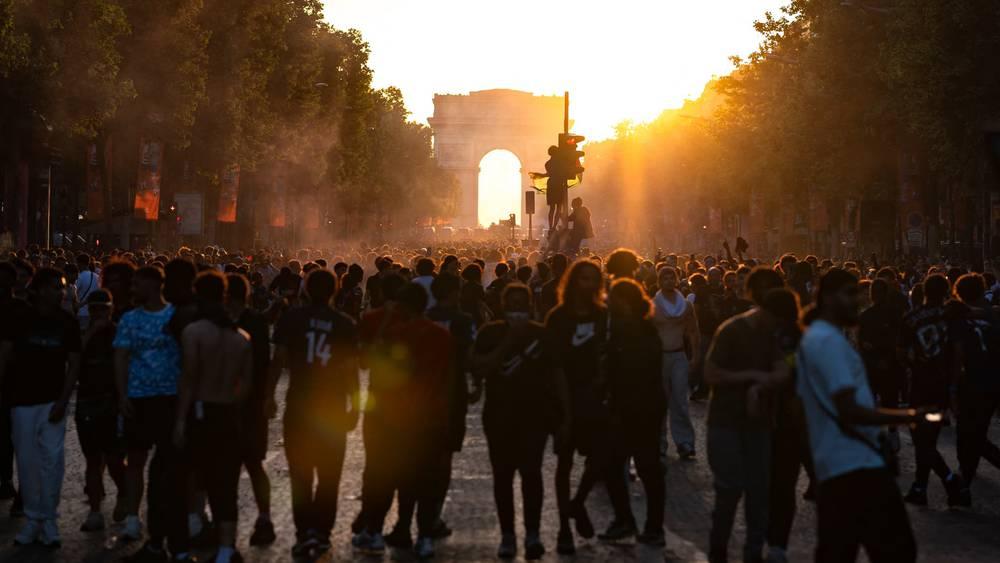
The municipality of Paris's 8th Arrondissement has called for the adoption of a "zero gatherings" policy on the Champs-Élysées to prevent future acts of violence. This move follows widespread disturbances that transformed the avenue into what resembled a "street battlefield" last Saturday night, coinciding with celebrations after Paris Saint-Germain's victory over English club Arsenal in the Champions League final.
Local authorities in the 8th Arrondissement clarified that the Champs-Élysées is no longer a place for celebration but has become a focal point for violent confrontations. They stressed that current preventive strategies have reached their peak and are no longer capable of containing the situation. The municipality stated in an official declaration: "Since it is impossible to celebrate a match without descending into riots, the only logical response lies in adopting a new doctrine of completely preventing gatherings," indicating a necessary change in the security approach for such events.
In its assessment of the security situation, the municipality noted that authorities now find themselves suffering from the chaos rather than controlling it. It declared: "We no longer manage excesses; we now suffer from them. The preventive strategy has reached its limit, and the concept of zero losses no longer stands against the violence of organized gangs who no longer bother to disguise themselves as fans." These demands come as Mayor Catherine Lecuyer seeks to impose stricter controls to ensure the area's security and protect property from vandalism.
In this context, French Interior Minister Laurent Nunez revealed the extent of the tensions that accompanied the celebrations, noting 416 arrests among those involved in the riots, with 283 of these cases occurring in the greater Paris area alone. These figures reflect the magnitude of the security challenges faced by law enforcement agencies in managing sports crowds within major urban centers and their impact on the stability of residential neighborhoods.