Le Monde: AFCON Final Referee Faced Institutional Pressure Not to Card Senegal Players During Walkout
T.E (Elbotola)
05 April 2026at15:36
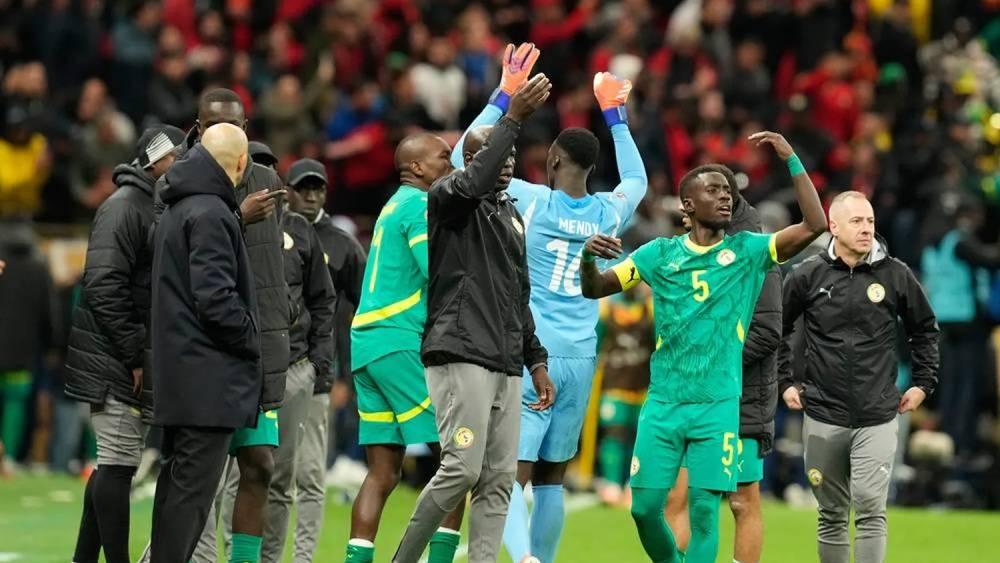
The French newspaper "Le Monde" has revealed intriguing details concerning the Africa Cup of Nations final, indicating that the match referee was subjected to institutional pressure to avoid expelling Senegal national team players.
According to the French publication, Tariq Najm, Secretary-General of the Royal Moroccan Football Federation, highlighted a serious issue in a memo he submitted, which was discussed during the CAF Executive Committee meeting in Dar es Salaam, Tanzania, on February 13.
The information clarified that Congolese Olivier Safar, head of the CAF Referees Committee, admitted that institutional instructions were given to the match referee during a stoppage period not to penalize Senegal players with yellow cards.
Two Senegal national team players had already received a yellow card at that point, and further bookings could have led to their expulsion from the field.
What institutional pressure did the AFCON final referee face?
The AFCON final referee faced institutional pressure to avoid issuing yellow cards to Senegal national team players during a match stoppage. This directive was admitted by the head of the CAF Referees Committee, as revealed in a memo discussed by the CAF Executive Committee.
Why was the referee instructed not to card Senegal players?
The referee was instructed not to card Senegal players because two had already received yellow cards. Further bookings could have led to their expulsion from the field, potentially impacting the final's outcome. This detail emerged from a memo submitted by a key football federation official.
How did this revelation about the AFCON final referee come to light?
This revelation about the AFCON final referee came to light through the French newspaper Le Monde, which detailed a memo submitted by the Secretary-General of the Royal Moroccan Football Federation. The memo was discussed during a CAF Executive Committee meeting, bringing the institutional instructions to light.