
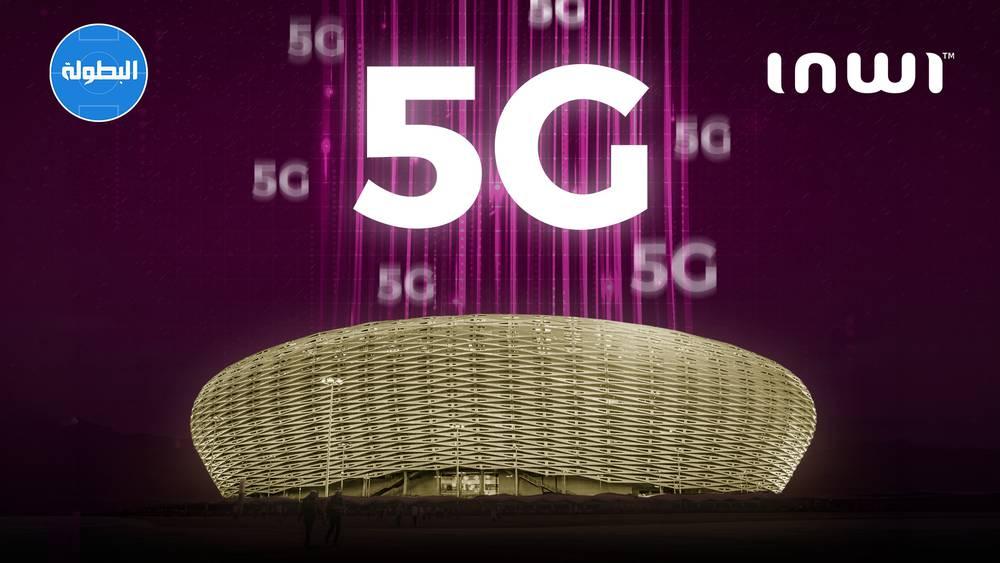
Inwi Leads AFCON Telecom Race, Internet Speed Highlights Moroccan Organizational Success
The 2025 Africa Cup of Nations (AFCON), which concluded on January 18, 2026, was not merely an exceptional football event in terms of figures and attendance. It also served as a practical test for Morocco's telecommunications infrastructure, as part of its preparations to host the 2030 FIFA World Cup.
In this context, data from a study conducted by Ookla, a global leader in internet performance analysis, revealed Inwi's superiority in providing the best connectivity experience within stadiums. The company topped the rankings in most of the evaluated venues.
The tournament coincided with the launch of 5G services in the Kingdom, providing a real opportunity to test networks under significant fan pressure, with over a million spectators inside the stadiums. According to the study, Inwi recorded the highest average download speeds in three out of five main stadiums.
Peak performance was observed at City Stadium (Al Barid), where download speeds reached 461.7 Mbps, the highest recorded figure. Maroc Telecom, meanwhile, stood out at Moulay Hassan Stadium with a speed of 161.25 Mbps.
In terms of user experience, these figures translated into high-quality usage. Inwi provided the fastest web page loading times in four out of five stadiums and recorded the best video start-up time (averaging less than 1.4 seconds) across all venues, offering fans a seamless viewing experience.
The report revealed variations in performance among stadiums. Al Barid Stadium led in average download speed (236 Mbps), while Rabat Olympic Stadium excelled in upload speed.
Conversely, Mohammed V Stadium was characterized by strong 4G and 5G network coverage due to its urban location. However, signal quality was somewhat affected by the high spectator density, whereas Rabat Olympic Stadium recorded weaker signals.
This performance reflects the significant investments allocated by the state, amounting to $16.6 billion for infrastructure development by 2030, as part of the “Digital Morocco 2030” strategy aimed at covering 70% of the population with 5G networks.
In conclusion, Ookla confirmed that Morocco's mobile networks successfully passed the stress test during the tournament, reinforcing the Kingdom's confidence in its ability to provide world-class communication services during the 2030 World Cup.