
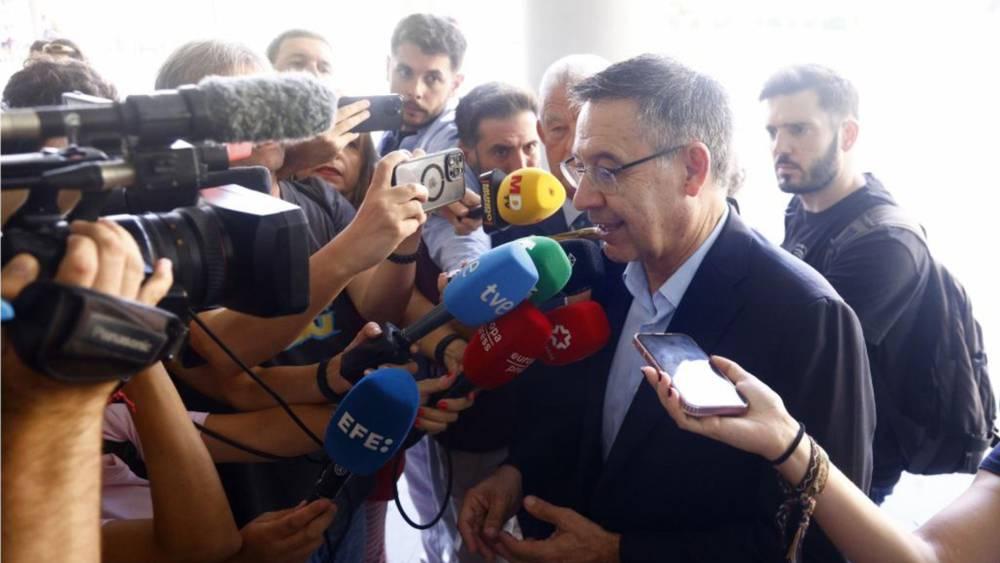
Bartomeu Appears in Court Over Barçagate, Criticizes Spanish Police Investigation
Josep Maria Bartomeu, the former president of FC Barcelona, testified on Friday before Investigating Court No. 13 in Barcelona, Spain, as part of the ongoing investigation into the case known as Barçagate. Bartomeu clarified during his court appearance that the club's decision to contract Nicestream was solely aimed at monitoring social media and improving FC Barcelona's public image. He emphatically denied that the purpose of the contract was to create fake accounts to discredit opponents.
Bartomeu criticized the direction taken by the investigation conducted by the Anti-Money Laundering and Economic Crimes Unit of the Catalan regional police, Mossos d'Esquadra, describing the procedures as "extremely strange, lengthy, and complex." Bartomeu stated, "I respect the police force one hundred percent, but I am very surprised by the actions of this investigative unit; everything is proceeding in a very long and complicated manner." The former official also requested an additional hearing to review new documents, estimated to be between 5,000 and 6,000 pages, which the security services had provided only three days before his testimony.
The Barçagate case revolves around allegations that the club's management paid Nicestream to target individuals critical of Barcelona's administration on social media platforms. Regional police reports indicate that approximately 2.3 million euros of club funds were paid to the aforementioned company. Bartomeu emphasized during his statement, "Under no circumstances was the contract made to create accounts to defame anyone; rather, the instructions given to the company were always to improve the club's image and reputation." He also expressed his commitment to providing complete WhatsApp conversation logs to offer a more comprehensive context for the messages that appeared in the police report.
In a related development, Jaume Masferrer, Bartomeu's former chief of staff, also appeared before the court for questioning on charges related to disloyal administration and corruption. These developments come as Spanish judicial authorities seek to determine legal responsibilities regarding how budgets allocated for these digital services were spent and their compliance with regulations governing the management of sports clubs.